Landlord insurance vs renters insurance: what each policy actually covers
When a pipe bursts in a rental home and damages the tenant's laptop, furniture, and a section of hardwood flooring, two questions hit at once: who pays for the flooring, and who pays for the laptop? The answer depends entirely on how landlord insurance vs renters insurance divides responsibility. Most people assume one policy handles everything. It does not. These are two separate policies built for two separate purposes, and understanding the split can save both landlords and tenants from a costly surprise.
What landlord insurance covers
Landlord insurance, sometimes called a dwelling fire policy or rental property policy, protects the property owner and the investment itself. If you own a rental home, duplex, or small apartment building in Ohio, this is the coverage you carry, not a standard homeowners policy.
A typical landlord policy covers three core areas:
- Dwelling coverage : pays to repair or rebuild the structure itself, including attached garages, built-in appliances, and permanent fixtures like flooring, cabinets, and plumbing.
- Liability coverage : protects you if a tenant or visitor is injured on the property and sues you. Ohio landlords face the same slip-and-fall exposure as any property owner, and a single lawsuit can easily exceed $100,000 in legal costs and damages.
- Loss of rental income : covers the rent you would have collected while the property is being repaired after a covered loss, such as a fire or severe storm damage.
Some landlord policies also include coverage for other structures on the property, like a detached garage or storage shed, and optional coverage for vandalism or tenant damage beyond normal wear and tear.
What landlord insurance does not cover is the tenant's personal belongings. That laptop, furniture, clothing, and personal items sitting inside the unit are not the landlord's responsibility under their policy. That is exactly what renters insurance addresses.
What renters insurance covers
Renters insurance is the tenant's policy. It is designed specifically for people who live in a property they do not own. The coverage is broad for what is usually a very affordable premium, often between $12 and $25 per month in Ohio depending on the coverage limits and deductible chosen.
A standard renters policy typically includes:
- Personal property coverage : replaces your belongings if they are stolen, destroyed by fire, or damaged by a covered peril. This includes furniture, electronics, clothing, and kitchen items.
- Personal liability : protects you if someone is injured inside your unit or if you accidentally cause damage to someone else's property. If your bathtub overflows and damages the apartment below yours, your liability coverage responds.
- Additional living expenses (ALE) : pays for a hotel, meals, and other costs if your rental unit becomes uninhabitable due to a covered loss and you have to temporarily live elsewhere.
One detail tenants often miss: personal property coverage under a renters policy is not limited to items inside the unit. Most policies extend coverage to belongings in your car, a storage unit, or with you while traveling, up to the policy limits. Many renters never use that benefit simply because they do not know it exists.
For a closer look at how personal property policies work in Ohio, the renters insurance page at The Hutch Agency walks through the key coverage options worth comparing.
The overlap that confuses everyone
Both policies include liability protection, which is where most of the confusion starts. Here is how the two liability coverages work side by side.
Say a tenant's guest trips on a loose rug in the living room and breaks an arm. The tenant could be held liable for the guest's medical bills and potential legal costs. The tenant's renters policy liability coverage handles that. The landlord's liability coverage is separate and would generally only apply if the landlord was found negligent, for example if the landlord had been notified about a broken step and failed to fix it.
Now say a fire starts in the unit because of faulty wiring the landlord knew about and ignored. The landlord's liability coverage becomes relevant. The tenant's renters policy would still pay to replace the tenant's belongings and cover temporary housing costs, but the tenant might also have a direct claim against the landlord.
The core principle: the landlord's policy protects the structure and the landlord's liability. The tenant's policy protects the tenant's belongings and the tenant's liability. They run parallel, not overlapping.
Why Ohio landlords should require renters insurance
Ohio landlords are legally permitted to require tenants to carry renters insurance as a condition of the lease, and more landlords are doing exactly that. It is not just about protecting the tenant. It protects the landlord too.
Consider a realistic scenario: a tenant leaves a candle burning and a small fire damages the unit. The tenant has no renters insurance and no money to contribute toward repairs. The landlord's policy covers the structural damage, but the landlord may still face a rate increase at renewal and has to manage the claim process entirely on their own. If the tenant had carried renters insurance with liability coverage, that policy could have contributed to the repair costs.
Requiring renters insurance also reduces the likelihood that a tenant pursues the landlord for the loss of personal property, since the tenant's own policy covers it. In Ohio, you can document the requirement in the lease and ask for proof of coverage at signing and at each renewal. Many carriers will notify the landlord if the policy lapses.
If you own rental property and want to understand the full scope of what a landlord insurance policy includes, reviewing your options with an independent agent who can compare carriers is a practical next step.
Common gaps that leave people exposed
Both landlord and renters policies have exclusions worth knowing before you need to file a claim.
Flood damage is almost always excluded
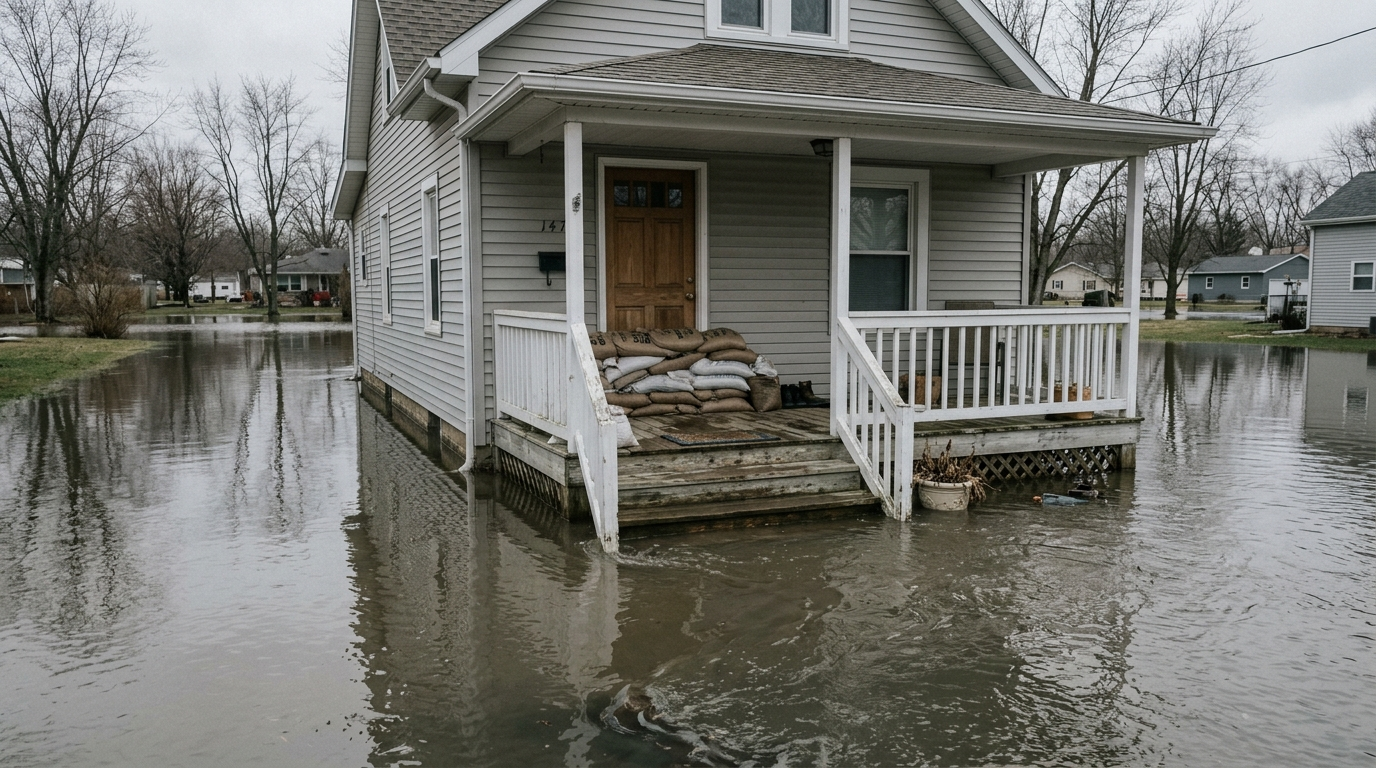
Standard landlord policies and renters policies do not cover flood damage. In Ohio, flooding along the Scioto, Muskingum, and Ohio River corridors affects both rural and suburban rental properties. If a landlord's rental sits in a flood zone, a separate personal flood policy is needed to protect the structure. Tenants in flood-prone areas should look at flood coverage for their belongings as well, since the landlord's flood policy will not replace a tenant's furniture or electronics.
Earthquake coverage is separate
Ohio sits near the New Madrid seismic zone, and while major quakes are rare, minor seismic activity does occur in southern and eastern parts of the state. Neither a standard landlord policy nor a standard renters policy covers earthquake damage. Earthquake endorsements or standalone policies are available and worth discussing if the property is in a higher-risk area.
High-value items may need a separate rider
Standard renters policies cap coverage on certain categories like jewelry, art, and collectibles. A tenant with an engagement ring worth $5,000 and a renters policy that caps jewelry at $1,500 has a gap. A jewelry insurance rider or floater can fill it. The same logic applies to expensive camera equipment or musical instruments.
Landlord policies and vacant properties
If a rental property sits vacant for more than 30 to 60 days, many standard landlord policies suspend or limit coverage. Ohio landlords who own property between tenants should check whether their policy includes a vacancy clause and, if so, look at a vacant property policy to bridge the gap.
How much does each policy cost in Ohio?
Costs vary depending on the property's location, age, construction type, and the coverage limits chosen. The ranges below are a general starting point.
For landlord insurance in Ohio, expect to pay somewhere between $800 and $1,800 per year for a single-family rental home, depending on the home's value, location, and whether you add optional endorsements like rent guarantee or extended liability limits. Properties in flood-prone areas or with older roofs typically land at the higher end.
For renters insurance , most Ohio tenants pay between $150 and $300 per year for a basic policy with $30,000 in personal property coverage and $100,000 in liability. Tenants who own higher-value electronics or furniture may want to increase personal property limits, which adds a modest amount to the premium.
Both types of coverage are generally more affordable when bundled with an auto policy. If you are already comparing rates on auto insurance, ask about multi-policy discounts at the same time. Our post on bundling home and auto insurance breaks down how much that discount typically adds up to.
Get the right coverage for your situation
Whether you own a rental property in Proctorville, South Point, or anywhere else in the region, or you are a tenant looking to protect your belongings for a few dollars a month, the right policy makes a real difference when something goes wrong.
The Hutch Agency is an independent insurance agency, which means we compare coverage and pricing across multiple carriers rather than selling you one company's product. We work with landlords who need a solid rental property policy and tenants who want honest advice on renters coverage without the upsell. Give us a call at (740) 886-7200 or reach out through our contact page to talk through your options. We will help you find the right fit at a price that makes sense.