Ohio small business insurance requirements every owner should know
If you own a small business in Ohio, understanding Ohio small business insurance requirements is part of running a legally compliant operation. Some coverages are mandated by state law, others are required by lenders or landlords, and a few carry risks too serious to ignore. Getting this wrong can mean fines, lawsuits, or a coverage gap that puts everything you have built at risk. What follows is a plain-language breakdown of what Ohio actually requires, what is strongly recommended, and how to avoid paying for the wrong things.
What Ohio law actually mandates for businesses
Ohio does not require every business to carry every type of insurance, but there are two areas where the law is clear and the penalties for non-compliance are real.
Workers' compensation
Ohio is one of a small number of states with a monopolistic workers' compensation system , which means most employers must purchase coverage through the Ohio Bureau of Workers' Compensation (BWC) rather than a private carrier. If you have even one employee (full-time, part-time, or seasonal), you are generally required to carry workers' comp. Sole proprietors and partners can elect to be excluded, but the moment you bring on help, the obligation kicks in.
Operating without BWC coverage in Ohio is a serious matter. You can face fines, be held personally liable for an injured worker's medical costs, and lose the ability to defend against lawsuits filed by employees. The BWC sets premium rates based on your industry classification and your claims history, so safe workplaces pay lower costs over time. You can learn more about this coverage on The Hutch Agency's workers' compensation page.
Commercial auto insurance
If any vehicle is titled in the name of your business or is used primarily for business purposes, it needs a commercial auto policy . A personal auto policy will not cover it. Ohio requires minimum liability limits of $25,000 per person / $50,000 per occurrence for bodily injury and $25,000 for property damage on all registered vehicles. For most businesses, especially those hauling equipment or carrying clients, those minimums are far too low. A single accident involving a company truck can easily exceed $100,000 in damages. See commercial auto insurance options for what a proper business policy looks like beyond the state minimums.
Coverages required by contracts, lenders, and landlords
Beyond state law, Ohio small business owners often find they are contractually required to carry certain coverages. These obligations are just as real as legal mandates.
General liability
Ohio does not require general liability by statute, but nearly every commercial lease, client contract, and government bid will demand it. General liability insurance covers third-party bodily injury, property damage, and basic advertising injury claims. A standard policy provides $1,000,000 per occurrence / $2,000,000 aggregate . If a customer slips in your store or you accidentally damage a client's property, this is the coverage that responds. You can review what a general liability policy covers in more detail.
Commercial property insurance
If you have a mortgage or a business loan secured by equipment or inventory, your lender will require you to insure that collateral. Even if you own your building outright, leaving it uninsured is a bet most Ohio business owners would not want to make. Commercial property insurance covers your building, contents, and equipment against fire, theft, vandalism, and most weather-related damage. Ohio's weather alone, including ice storms, high winds, and tornadoes, makes this coverage a practical necessity.
Professional liability (errors and omissions)
Accountants, consultants, designers, real estate agents, and many other licensed professionals in Ohio are either required by their licensing board or by client contracts to carry professional liability insurance . This coverage protects you when a client claims your advice or service caused them a financial loss, even if you did nothing wrong. A lawsuit alone, regardless of outcome, can cost tens of thousands of dollars to defend.
Coverages that are not required but are worth serious consideration
Ohio small business insurance requirements set the legal floor. The coverages below close the gaps between technically compliant and actually protected.
Business owners policy (BOP)
For most small businesses, a business owners policy is the most cost-effective starting point. A BOP bundles general liability and commercial property into a single package, often at a lower combined premium than buying each separately. Many BOP policies also include business interruption coverage, which pays your ongoing expenses (rent, payroll, utilities) if a covered loss forces you to close temporarily. You can read a deeper breakdown at our guide to what a business owners policy covers.
Business interruption insurance
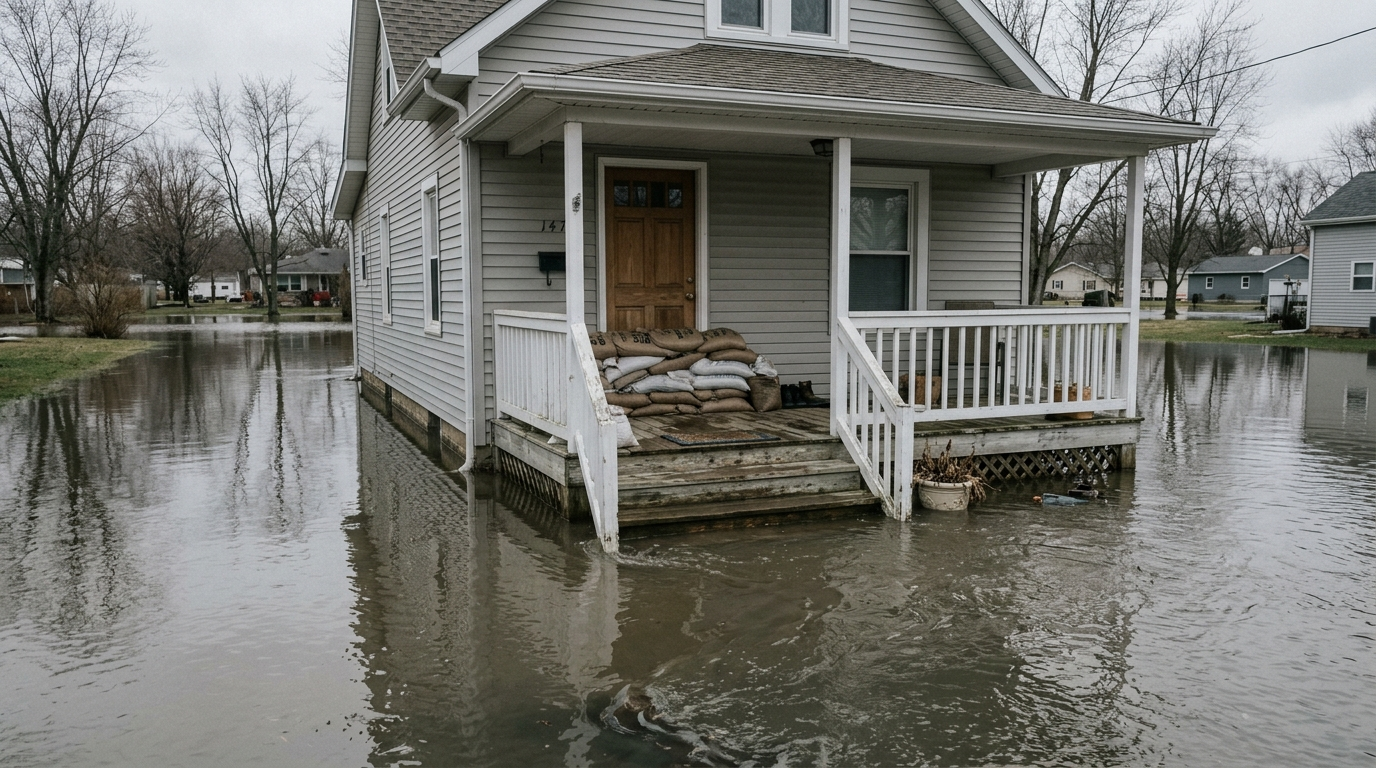
If a fire or a burst pipe shuts your doors for two months, your lease, your employees, and your loan payments do not pause. Business interruption insurance covers that gap. Ohio has seen significant flooding and storm damage in recent years, and businesses without this coverage were left paying fixed costs out of pocket while waiting for property repairs to finish.
Cyber liability
Ohio passed the Ohio Data Protection Act (HB 250) , which provides a legal safe harbor to businesses that implement a qualifying cybersecurity program. But the law does not require cyber liability insurance, and it does not prevent lawsuits. If your business stores customer data (credit cards, medical records, personal information), a data breach can cost a small business $50,000 to $200,000 or more in notification costs, legal fees, and remediation. Cyber liability policies have become affordable even for small operations and are increasingly common in vendor and client contracts.
Commercial umbrella
A commercial umbrella policy provides an extra layer of coverage when a catastrophic claim exceeds your underlying policy limits, typically in increments of $1,000,000. For businesses with significant foot traffic, delivery vehicles, or public-facing operations, this is a relatively low-cost way to avoid a single large judgment wiping out everything.
Industry-specific requirements in Ohio
Certain industries in Ohio have additional insurance requirements on top of the general framework described above.
- Contractors and construction: Ohio contractors bidding on public projects must meet bonding and insurance requirements specified in the contract. Many require surety bonds in addition to general liability and workers' comp. Builders working on new construction may also need builders risk insurance to cover the structure while it is under construction.
- Restaurants and bars: Businesses that sell or serve alcohol in Ohio face dram shop liability. Ohio Revised Code Section 4399.18 allows injured third parties to sue a liquor permit holder who knowingly sold alcohol to a visibly intoxicated person. Liquor liability insurance is not required by law but is strongly advised for any permit holder.
- Healthcare and home services: Licensed professionals (nurses, therapists, contractors, and others) often have errors and omissions or malpractice requirements built into their licensing requirements or employer contracts.
- Nonprofits and organizations with boards: Directors and officers (D&O) coverage protects board members from personal liability for decisions made on behalf of the organization. Many Ohio nonprofits require it before a board member will agree to serve.
How an independent agent helps you meet Ohio requirements without overpaying
No single policy covers every Ohio small business insurance requirement. Your coverage depends on your industry, your number of employees, whether you own or lease your space, what clients and contracts you have, and what risks are specific to your corner of Ohio. Working with an independent agent means they compare multiple carriers and structure a package that actually fits your situation, rather than presenting whatever one company offers.
Ohio's insurance market is competitive, which means rates vary significantly from carrier to carrier for the same coverage. An independent agent shops that market on your behalf at every renewal, not just when you first sign up.
Ready to make sure your business is covered correctly?
The Hutch Agency is an independent insurance agency serving small businesses throughout Ohio and the surrounding region. That means we work for you, not for any single insurance company. We compare coverage options across multiple carriers to find the right fit for your business, whether you need a basic BOP to satisfy a lease requirement or a full commercial insurance package built from the ground up.
If you are not sure whether your current coverage meets Ohio's legal requirements or leaves gaps you have not thought about, give us a call at (740) 886-7200 or reach out through our contact page to start a conversation. There is no pressure, no jargon, just a straight answer about where you stand.