New home insurance in Ohio: what first-time buyers actually need at closing
Buying your first home in Ohio is exciting, and the closing table can feel like a blur of signatures and deadlines. One thing that cannot wait until after move-in day is homeowners insurance. Lenders require proof of a paid policy before they will fund your loan, which means figuring out new home insurance in Ohio for first-time buyers is not optional. Once you understand what you are actually buying, the process is far less stressful than it looks.
Why your lender requires insurance before closing
Your mortgage lender has a financial stake in the property you are purchasing. If the house burns down the day after closing, the bank wants to know their collateral is protected. That is why nearly every conventional, FHA, and VA loan in Ohio requires you to show a binder (also called "evidence of insurance") before the loan funds.
The binder is a temporary document your insurer provides that proves coverage is active. Your lender will typically ask for it at least a few days before your scheduled closing date, so do not wait until the morning of. Shopping for coverage two to three weeks before closing gives you enough time to compare options without feeling rushed into a policy you do not fully understand.
One important note: lenders set a minimum coverage amount based on the loan balance, but that minimum is often less than what you actually need. The better benchmark is the replacement cost of your home, meaning what it would cost to rebuild it from the ground up at today's lumber and labor prices. In Ohio, construction costs have climbed significantly in recent years, and many first-time buyers underinsure because they confuse market value with replacement cost. These two numbers are rarely the same.
What a standard Ohio homeowners policy covers
Most homeowners policies are built around the same core coverage categories. Understanding each one helps you read a quote intelligently instead of just comparing premium numbers.
- Dwelling coverage : pays to repair or rebuild the structure of your home, including the roof, walls, foundation, and attached garage.
- Other structures : covers detached garages, fences, sheds, and similar outbuildings, typically at 10% of your dwelling limit.
- Personal property : replaces your belongings (furniture, clothes, electronics) if they are stolen or destroyed by a covered peril.
- Loss of use : pays for a hotel or rental while your home is being repaired after a covered loss.
- Liability : protects you if someone is injured on your property and sues you, or if you accidentally damage someone else's property.
- Medical payments : covers minor medical bills for guests injured at your home, regardless of fault.
Ohio follows standard ISO policy forms, so the structure above applies statewide. What varies between carriers is the premium, the deductible, the list of covered perils, and how personal property is valued. Those details are worth reviewing carefully before you sign anything. For a closer look at what each section actually covers, the post home insurance 101 walks through the fine print in plain language.
Ohio-specific risks first-time buyers should know about
Ohio weather is genuinely unpredictable. The southern and eastern parts of the state, including communities along the Ohio River corridor like South Point, Proctorville, and Chesapeake, face real flood exposure from the river and its tributaries. The hilly terrain across Lawrence and Gallia counties can funnel runoff in ways that surprise new homeowners.
Here is the detail that catches many first-time buyers off guard: flood damage is not covered by a standard homeowners policy. Flooding requires a separate policy, either through the National Flood Insurance Program (NFIP) or a private flood insurer. If your lender determines that your home sits in a designated flood zone, they will require flood coverage at closing. Even if your home is outside a mapped flood zone, it is worth asking whether a flood policy makes sense given the property's location and elevation.
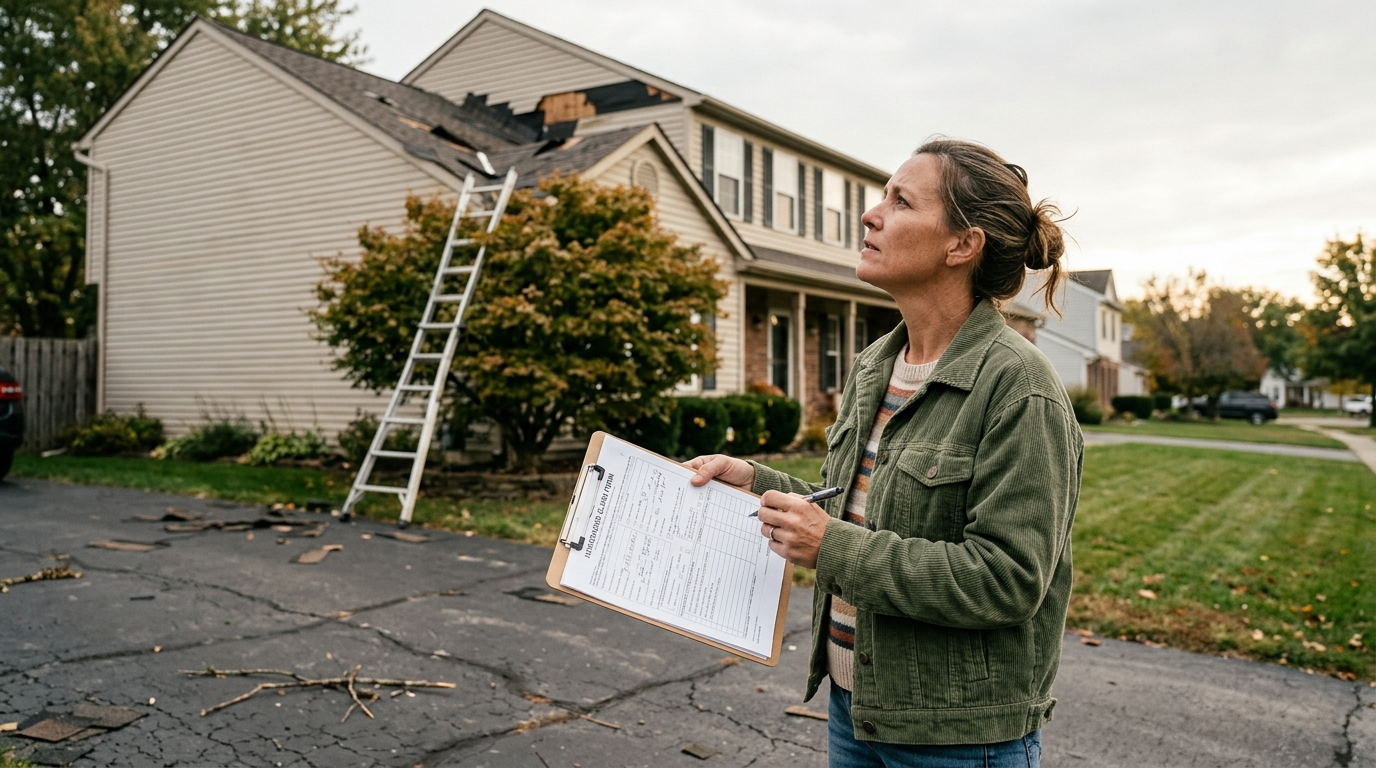
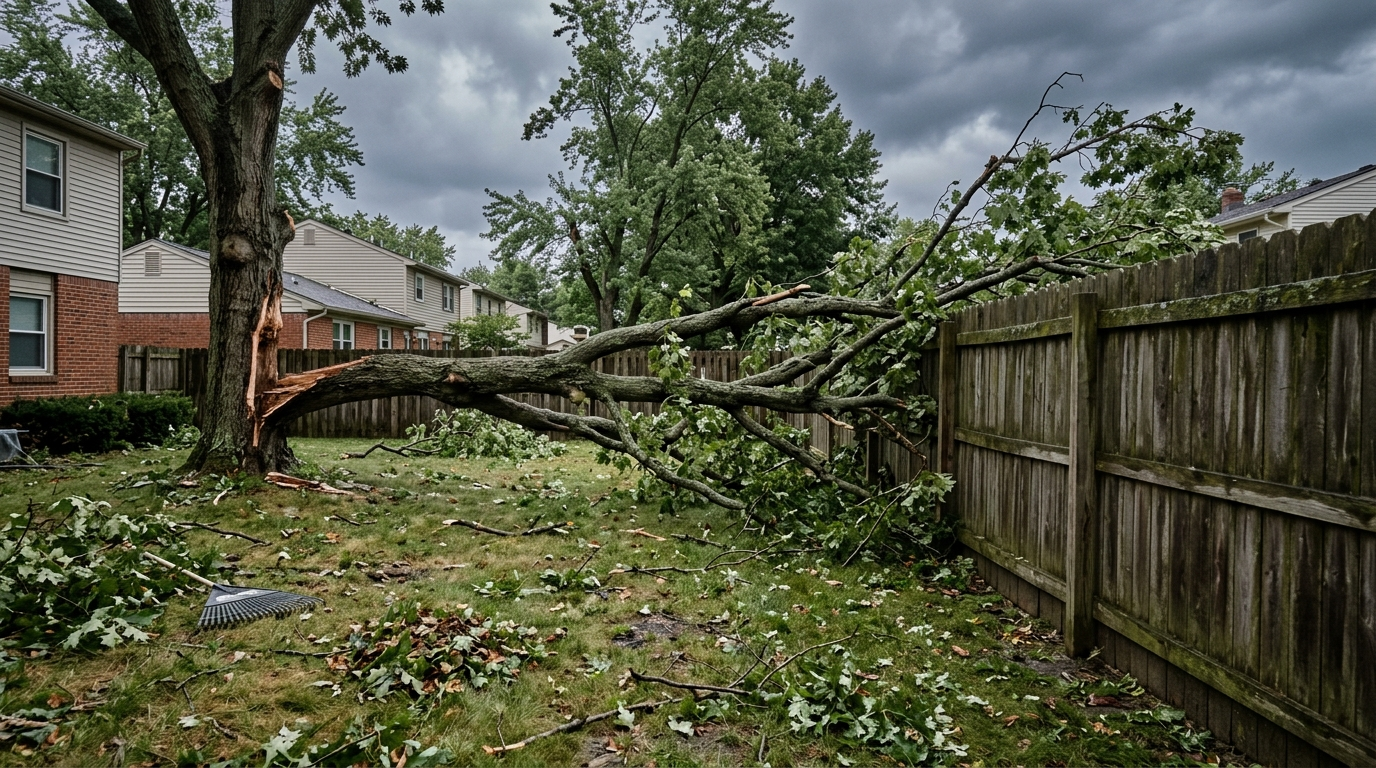
Wind, hail, and severe thunderstorms are also common across Ohio. Most standard policies cover wind and hail damage, but check whether your policy uses a separate wind or hail deductible. That type of deductible works as a percentage of your dwelling limit rather than a flat dollar amount. On a $250,000 home with a 2% wind/hail deductible, that is $5,000 out of pocket before the policy pays anything. Ohio also sits in a tornado corridor, and reading what your policy pays after a major wind event is important to do before you need it.
Replacement cost vs. actual cash value: choose wisely
One of the most consequential decisions you will make when setting up a new home insurance policy is how your belongings and structure are valued after a claim.
Replacement cost value (RCV) pays what it costs to buy a new equivalent item today. If your three-year-old laptop is stolen, RCV coverage pays for a comparable new laptop.
Actual cash value (ACV) pays replacement cost minus depreciation. That same laptop might only net you $200 after the carrier applies depreciation. ACV policies carry lower premiums, but the gap between what you receive and what you need to replace your belongings can be painful after a real loss.
For first-time buyers furnishing a home for the first time, choosing RCV coverage on personal property is almost always worth the slightly higher premium. The difference in cost is usually modest, and the protection gap between the two options is significant.
On the dwelling side, ask your agent whether the policy includes an extended replacement cost endorsement. This provides an extra cushion, often 20-50% above your dwelling limit, if construction costs spike after a major loss. Given the material cost volatility Ohio has seen over the past few years, that buffer matters.
How much does homeowners insurance cost in Ohio for a first-time buyer?
Ohio is generally considered a moderately priced state for homeowners insurance, but premiums vary widely based on location, construction type, age of the home, and the coverage limits you choose.
As a rough benchmark, Ohio homeowners pay somewhere in the range of $900 to $1,800 per year for a standard policy on a single-family home, with the median sitting around $1,100 to $1,300. Homes in rural areas or in communities with longer fire department response times sometimes pay more. Older homes with original electrical, plumbing, or roofing systems are also priced higher because they represent more risk to underwriters. For a closer look at what drives rates in different parts of the state, including rural areas, see the post on Ohio homeowners insurance cost.
As a first-time buyer, one of the fastest ways to lower your premium is to bundle your homeowners and auto policies with the same carrier. Bundling discounts of 10-20% are common and can meaningfully reduce what you pay each month. The post on bundling home and auto in Ohio covers how those savings actually work and what to watch for when combining policies.
Common mistakes first-time buyers make when shopping for coverage
A few patterns show up repeatedly when first-time buyers shop for homeowners insurance. Knowing them in advance saves money and headaches.
- Insuring for market value instead of replacement cost : market value includes land, which cannot burn down. Your dwelling limit should reflect what it costs to rebuild, not what you paid.
- Choosing the lowest deductible automatically : a higher deductible lowers your premium, and if you have an emergency fund, it can make financial sense to carry a $1,500 or $2,500 deductible instead of the default $1,000.
- Skipping a home inventory : before you unpack boxes, photograph and document your belongings room by room. This is the single most useful thing you can do to speed up a personal property claim.
- Forgetting about liability limits : the default liability limit on many policies is $100,000. For most homeowners, $300,000 is a more appropriate starting point, and if you have significant assets, a personal umbrella policy adds an additional layer of protection at low cost.
- Not asking about discounts : new construction, security systems, smoke detectors, claims-free history, and loyalty discounts all vary by carrier. An independent agent can surface these across multiple companies at once.
Working with an independent agent vs. buying direct
When you are buying your first home, time is short and the decisions feel enormous. Working with an independent insurance agent rather than buying a policy directly from a single carrier's website is one of the more practical choices you can make.
A direct carrier (whether online or over the phone) can only offer their own products. An independent agent represents multiple carriers, which means they can run your information through several companies and bring back actual quotes for comparison. For a first-time buyer who does not yet know which carriers price Ohio homes favorably, that comparison step has real value. It is the difference between getting one price and knowing whether that price is competitive.
Independent agents also stay with you after the policy is issued. If you have a question about a claim, need to add coverage, or want to revisit your policy after a renovation, you have someone who knows your situation to call. That continuity matters more than it might seem on day one.
Get your first Ohio home insured the right way
The Hutch Agency is an independent insurance agency serving homeowners throughout Ohio and the surrounding region, including communities in Lawrence County, Gallia County, and along the Ohio River. Because we work with multiple carriers, we can compare options side by side and find coverage that fits both your home and your budget, without steering you toward any single company.
If you are closing on a home in the next few weeks, do not wait. Getting a quote early gives you time to ask questions, understand what you are buying, and arrive at the closing table with confidence. You can reach our team at (740) 886-7200 or visit our contact page to request a quote on homeowners insurance. We are here to make sure your first home is protected the right way from day one.