Comprehensive vs collision coverage in Ohio: what's the difference?
If you've ever stared at an auto insurance quote and wondered what comprehensive vs collision coverage in Ohio actually means for your wallet and your protection, you're not alone. These two coverages often get grouped together, but they pay for very different things. Knowing which one you need, and when you might need both, can prevent a painful surprise after an accident or a hailstorm.
What collision coverage pays for
Collision coverage pays to repair or replace your vehicle when it's damaged in an impact with another car, a guardrail, a telephone pole, or even a pothole that does real damage. The operative word is contact. If your car ran into something, or something ran into your car in a moving-vehicle event, collision is the coverage that steps in after your deductible.
A few real-world examples of collision claims in Ohio:
- Rear-end on US-35: you tap the car ahead of you in slow traffic near the Proctorville bridge and crumple your front bumper.
- Single-car rollover: you lose control on an icy Route 7 in Lawrence County and slide into a ditch, rolling the vehicle.
- Parking lot impact: a driver backs into your parked car and flees; with no other insurance to collect from, your collision coverage picks it up.
Collision does not care who was at fault. Even if the accident was 100% your fault, your carrier pays (minus the deductible) for your vehicle's damage.
What comprehensive coverage pays for
Comprehensive coverage handles damage that has nothing to do with a collision. Think of it as "everything else" coverage. In Ohio, that list is longer than many drivers expect:
- Hail damage: Ohio averages dozens of hail events per year. A single storm in the Huntington or Ashland corridor can dent every panel on your car.
- Deer strikes: Ohio consistently ranks in the top ten states for deer-vehicle collisions. The Ohio Department of Transportation reports tens of thousands of deer accidents statewide annually.
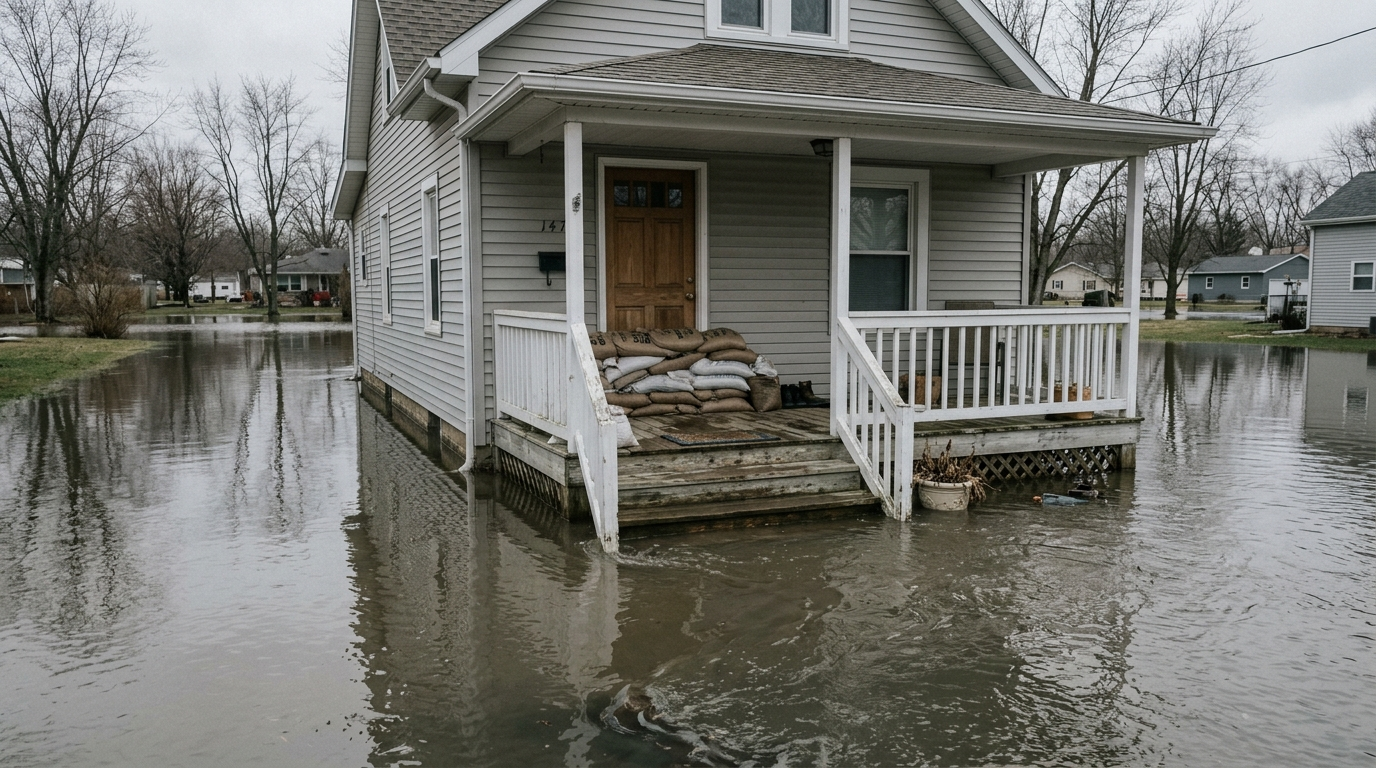
- Flooding: rivers along the Tri-State area flood regularly. A car submerged in floodwater is a comprehensive claim, not a collision claim.
- Theft: if your vehicle is stolen, comprehensive pays for the loss.
- Fire or explosion: whether from an electrical fault or an external fire.
- Fallen objects: a tree limb drops on your roof during a windstorm.
- Vandalism: someone keys your car or smashes a window.
One thing that trips up a lot of Ohio drivers: if a deer runs into your car and you swerve and hit a tree, you may have two separate claims. The deer impact is comprehensive; the tree impact is collision. Some carriers treat the whole event as one occurrence, but not all. It's worth asking your agent upfront.
Ohio law and what's actually required
Ohio law does not require comprehensive or collision coverage. The state minimum requirements under ORC 4509.51 are liability-only coverages. Ohio requires at least $25,000 per person and $50,000 per accident in bodily injury liability, plus $25,000 in property damage liability. That's it.
Liability pays for damage you cause to other people and their property. It does nothing for your own vehicle. If you carry only state minimums and you total your car in an at-fault accident, you get nothing for your own loss. For a full breakdown of what those minimums mean in practice, see our post on Ohio auto insurance minimum requirements.
Comprehensive and collision become effectively required when you have a car loan or a lease. Lenders and leasing companies mandate both coverages to protect their financial interest in the vehicle. If you drop them without paying off the loan, your lienholder can force-place coverage on you at a much higher rate than you'd find on the open market.
Deductibles and how they affect your decision
Both comprehensive and collision carry a deductible, the amount you pay out of pocket before the insurance kicks in. Common deductible choices in Ohio run from $250 up to $1,500 , with $500 and $1,000 being the most popular.
The higher you set your deductible, the lower your premium. But the math only works in your favor if you can genuinely absorb that deductible without stress. Some things to consider:
- Vehicle value: if your car is worth $6,000 and you carry a $1,000 deductible, a major claim pays at most $5,000 minus depreciation. Weigh whether that premium savings justifies the exposure.
- Claim frequency risk: if you commute on rural two-lane roads through Southern Ohio's deer territory every day, a lower comprehensive deductible makes a lot of sense.
- Cash reserves: a $500 deductible offers little real protection if you can't write that check when the time comes.
A general rule independent agents use: if your annual premium for a coverage is more than 10% of what the coverage would actually pay out (your car's actual cash value minus the deductible), it may not be worth carrying.
When to drop comprehensive or collision
At some point, most vehicles reach an age and value where paying for comprehensive and collision stops making financial sense. There's no universal cutoff, but here's a practical framework Ohio drivers use:
If your car's actual cash value (ACV) is under $4,000 to $5,000, run the numbers on your annual premium for those coverages plus your deductible. If the total approaches or exceeds the ACV of the car, you're essentially pre-paying for a claim that won't cover much anyway. Putting that premium money into a savings account and self-insuring the vehicle is a reasonable alternative.
That said, dropping both coverages on an older car in a flood-prone area near the Ohio River, or in a county with heavy deer traffic, deserves more thought than the same decision made in a suburban garage. Local risk is real and it should factor into your coverage math.
There's also a middle-ground approach: some drivers drop collision (typically the more expensive of the two) but keep comprehensive because the risk of a deer strike, hail event, or flood is high relative to the premium. Comprehensive is almost always cheaper than collision, sometimes by 40-60%, so keeping it alone can make financial sense.
How rates are calculated for these coverages
Your premium for comprehensive and collision is driven by several factors specific to your situation. Ohio carriers look at:
- Vehicle make, model, and year: expensive cars and popular theft targets cost more to insure.
- Your driving record: at-fault accidents raise collision rates specifically.
- Your ZIP code: carriers use loss data by geography. A ZIP code near the Ohio River floodplain will carry higher comprehensive rates than one inland.
- Deductible chosen: higher deductible, lower premium.
- Annual mileage: more miles driven means more exposure to collision events.
For a deeper look at the mechanics behind your full auto rate, our post on how car insurance rates are calculated walks through each factor in detail.
Comprehensive vs collision: a side-by-side summary
- What triggers it. Collision: impact with another vehicle or object. Comprehensive: theft, weather, animals, fire, vandalism.
- Required by Ohio law. Neither. Both are optional unless your lender requires them.
- Typical deductible range. $250 to $1,500 for each, chosen separately.
- Which costs more. Collision is almost always the more expensive of the two.
- Common Ohio scenarios. Collision: sliding on ice, fender bender, pothole damage. Comprehensive: deer strike, hail, Ohio River flooding, theft.
- When to consider dropping. When annual premium plus deductible approaches the vehicle's ACV.
Get the right coverage for your car and your budget
The answer to "which coverage do you need" almost always comes back to your specific vehicle, your loan situation, your local risk factors, and what you can afford to absorb out of pocket. There's no single right answer, but there is a right answer for your situation.
At The Hutch Agency , we're an independent insurance agency, which means we compare rates and coverage options across multiple carriers to find the combination that fits you. We're not tied to one company's offerings. If you're in the Ashland, South Point, Proctorville, or surrounding areas of the Tri-State region, we can pull quotes side by side so you see exactly what you're getting for every dollar.
Ready to review your auto coverage or compare options on a new vehicle? Contact The Hutch Agency online or call us at (740) 886-7200 . You can also browse our full personal auto insurance options to see what we work with.