Commercial auto insurance in Ohio: the basics every business owner needs
If your business puts vehicles on Ohio roads, commercial auto insurance in Ohio is a legal requirement and one of the most important financial protections a business can carry. A single at-fault accident involving an uninsured company vehicle can expose your business to tens of thousands of dollars in liability, vehicle repair costs, and lost productivity. Yet many small business owners still rely on a personal auto policy and assume it covers their work vehicles. It does not.
This post covers what Ohio law requires, what commercial auto policies actually cover, and what decisions you will need to make when shopping for coverage.
Ohio's minimum commercial auto requirements
Ohio law requires all motor vehicles registered in the state to carry liability insurance at minimum. For most business vehicles, those minimums mirror the personal auto minimums: $25,000 per person / $50,000 per accident for bodily injury , and $25,000 for property damage . These are sometimes written as 25/50/25.
Those state minimums are almost always too low for a commercial operation. If your delivery truck causes a serious accident and injures multiple people, a $50,000 bodily injury limit can evaporate quickly. Medical bills, lost wages, and legal fees often climb well past what the minimum covers. Most insurance professionals recommend businesses carry at least $1,000,000 in combined single limit (CSL) liability, particularly if the vehicle is used around customers or on public job sites.
For businesses operating commercial trucks above a certain gross vehicle weight rating, federal Department of Transportation (DOT) requirements impose their own minimum liability limits, sometimes reaching $750,000 to $1,000,000 or more depending on cargo type. If you run vehicles across state lines or haul certain freight, you need to know which federal rules apply to you.
You can also read more about Ohio's auto insurance minimum requirements to understand how state law sets the floor for both personal and commercial coverage.
Personal auto vs. commercial auto: why the difference matters
A personal auto policy is designed for a privately owned vehicle used primarily for commuting and personal errands. The moment a vehicle is used to carry tools to a job site, deliver products, transport clients, or haul equipment, a personal policy can deny the claim entirely.
Insurance carriers draw a clear line between personal and business use. If you are in an accident while driving to a customer's location in a vehicle covered only by your personal auto policy, your insurer may refuse to pay. That leaves you and your business exposed out of pocket.
A commercial auto policy is built for business use. It covers the specific ways your vehicles are actually used, including higher mileage, multiple drivers, heavier loads, and frequent stops at client locations. It can also be written to cover a fleet of vehicles under one policy, which simplifies billing and administration.
What a commercial auto policy covers
A standard commercial auto policy includes several coverage components. Most businesses need at least the first three; the others depend on how the vehicles are used and how much financial risk you want to retain.
- Liability coverage pays for bodily injury and property damage you cause to others. This is what Ohio law requires, and it is the most important coverage on the policy.
- Uninsured/underinsured motorist coverage protects your business if one of your drivers is hit by a driver with no insurance or not enough coverage to pay the damages. Ohio has a significant number of uninsured drivers on the road.
- Medical payments (MedPay) covers medical expenses for your driver and passengers regardless of fault. It keeps claims off your health insurance and gets bills paid quickly.
- Collision coverage pays to repair or replace your vehicle after an accident, regardless of who is at fault. If you have a loan or lease on the vehicle, the lender almost certainly requires this.
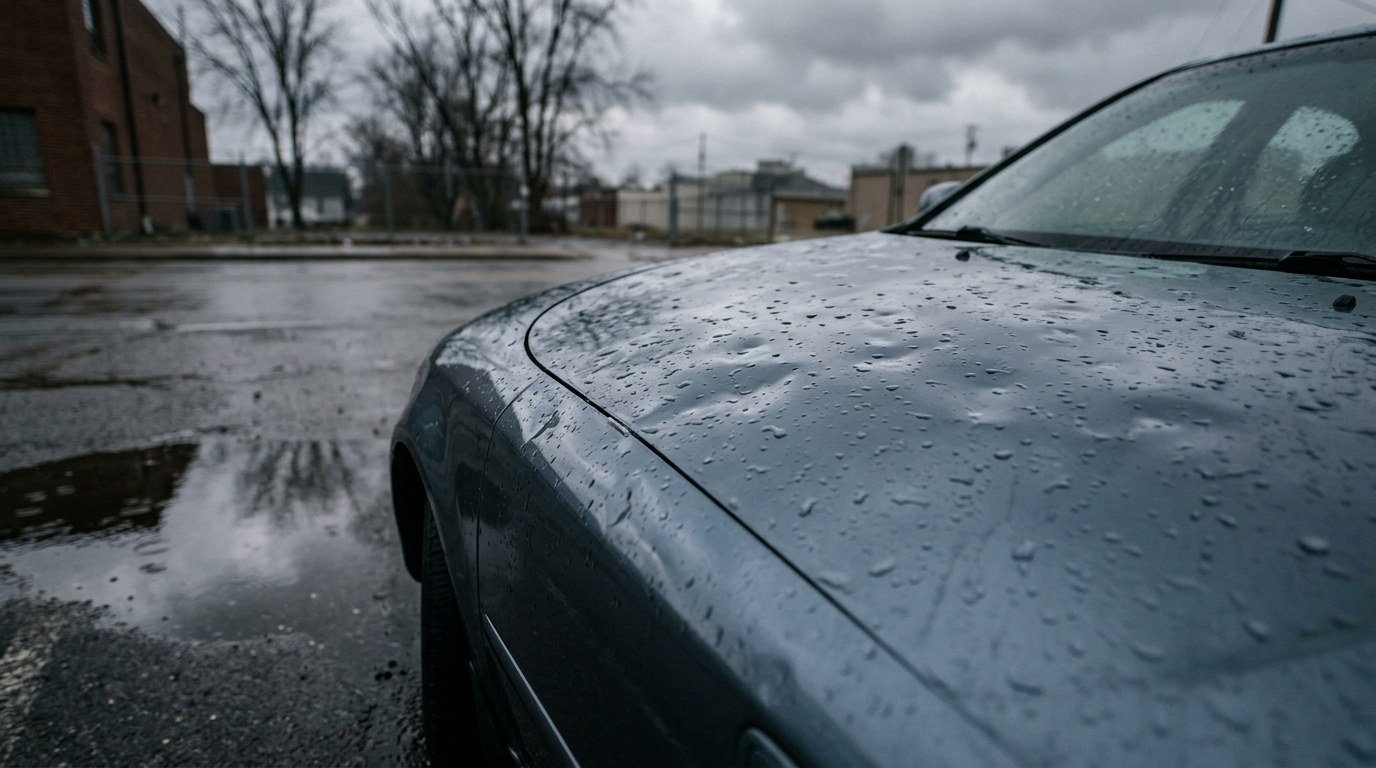
- Comprehensive coverage covers non-collision damage: theft, vandalism, flooding, hail, falling objects, and hitting an animal. Ohio weather, including hailstorms and flooding in river-adjacent areas, makes this coverage worth serious consideration.
- Hired and non-owned auto coverage extends liability coverage to rented vehicles your employees drive on business, or personal vehicles employees use for work purposes. If your employees run work errands in their own cars, you likely have exposure without this coverage.
Hired and non-owned auto is often overlooked by small businesses. You can learn more about how that specific coverage works on our hired and non-owned auto page.
Common business types that need commercial auto in Ohio
Some businesses obviously need commercial auto: trucking companies, delivery services, contractors with work trucks. But the list is longer than most people expect.
- Contractors and tradespeople such as electricians, plumbers, HVAC technicians, and roofers who drive to job sites with tools or equipment in the vehicle.
- Landscaping and lawn care businesses where trucks pulling trailers full of equipment are not covered under a personal policy.
- Food and product delivery operations where any vehicle used regularly to deliver products to customers needs commercial coverage.
- Real estate and property management where agents and property managers who drive to client properties as part of their business day have business-use exposure.
- Retail businesses with delivery vehicles where even a single cargo van used for local deliveries creates commercial auto exposure.
- Non-profits and organizations such as a church or community organization that owns a van used to transport members. That vehicle needs commercial auto, not personal auto.
If you are unsure whether your vehicle use qualifies as commercial, the answer is almost always yes if clients, customers, or revenue generation are involved. When in doubt, ask an agent before an accident forces the question.
Factors that affect your commercial auto premium in Ohio
Commercial auto rates vary widely depending on your business and how you operate. Carriers look at several factors when pricing a policy.
- Type and number of vehicles: a single cargo van costs less to insure than a fleet of heavy-duty trucks. Weight class, vehicle age, and vehicle value all affect the rate.
- Driver records: the driving history of every employee who operates a covered vehicle is reviewed. Multiple moving violations or at-fault accidents push premiums up. Carriers often run Motor Vehicle Reports (MVRs) on all listed drivers.
- Annual mileage: vehicles that spend more time on the road have more exposure. A vehicle driven 50,000 miles per year will cost more to insure than one driven 15,000 miles.
- Business type and use: a florist with a delivery van is priced differently than a construction company with a dump truck. The nature of the cargo and job site conditions affect risk.
- Coverage limits and deductibles: choosing higher liability limits costs more upfront but protects you from catastrophic losses. Raising your deductible on physical damage coverages can reduce your premium if you are comfortable absorbing smaller losses.
- Claims history: prior commercial auto claims, particularly at-fault accidents, will affect your premium. A clean loss history earns better rates over time.
- Location: where your vehicles are garaged and primarily operated affects pricing. Urban areas with higher traffic density typically carry higher premiums than rural routes.
How commercial auto fits into a broader business insurance plan
Commercial auto insurance covers your vehicles, but it does not cover everything your business faces. Most businesses need a combination of policies working together. A Business Owners Policy (BOP) , for example, bundles general liability and commercial property coverage into one policy, but it does not include commercial auto. You need that as a separate policy.
Businesses with significant liability exposure above their commercial auto limits may also want to consider a commercial umbrella policy, which sits on top of your underlying liability limits and pays when a large claim exhausts those limits.
If you have employees driving company vehicles, you should also review your Ohio workers' compensation requirements. Workers' comp covers on-the-job injuries, including injuries sustained in vehicle accidents while working, which is a separate coverage from what commercial auto provides.
For a broader view of your business insurance needs, our commercial insurance overview covers the full range of policies available to Ohio businesses.
What to do when shopping for coverage
Before you talk to an agent, gather the information you will need to get an accurate quote. This typically includes:
- Vehicle information: year, make, model, VIN, and current value for each vehicle you want to cover.
- Driver list: names, dates of birth, and driver's license numbers for all employees who will operate the vehicles.
- Current policy information: if you are switching carriers, bring your current declarations page so coverage gaps can be identified.
- Annual mileage estimates: per vehicle if possible, or a general estimate for the fleet.
- Business description: a clear explanation of what your business does and how the vehicles are used day to day.
- Claims history: any losses in the past three to five years, even if no claim was filed.
Working with an independent agent means you get quotes from multiple carriers at once rather than calling each company separately. Independent agents are not locked into one carrier, so they can find the policy that fits both your coverage needs and your budget. That comparison matters because commercial auto rates can differ significantly between carriers for the same risk.
Get the right commercial auto coverage for your Ohio business
At The Hutch Agency , we work with Ohio businesses to find commercial auto coverage that fits the way they actually operate. As an independent agency, we compare options across multiple carriers and help you understand what you are buying before you sign anything. We are not pushing one company's products; we are looking for the right fit for your business.
Whether you run a single work truck or a mixed fleet of vehicles, we can put together a quote and walk you through your options. Call us at (740) 886-7200 or contact us online to get started. We serve businesses across Ohio and the surrounding area and are happy to review your current coverage to make sure nothing falls through the cracks.